
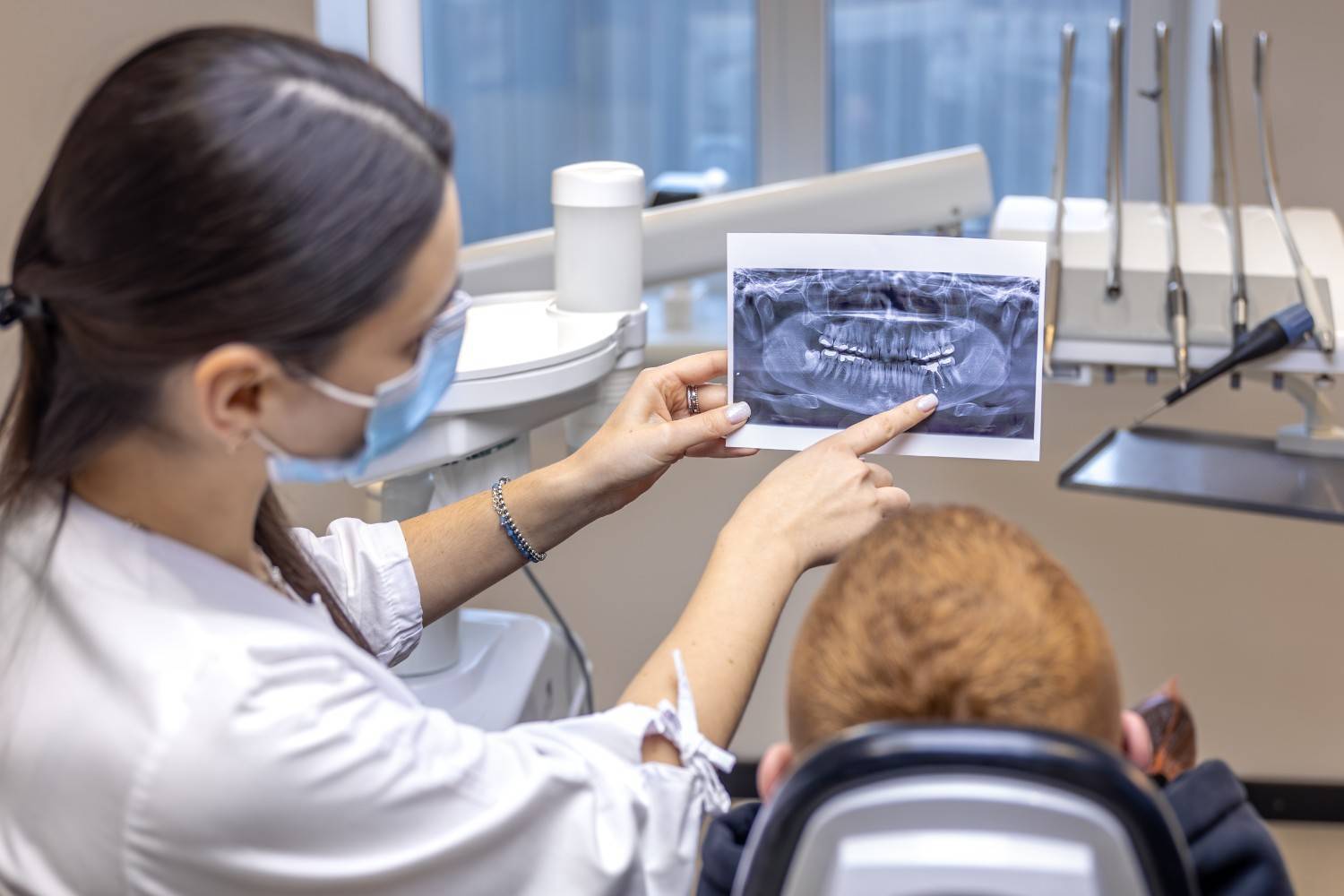
Early orthodontic care identifies and treats developing issues in a child’s bite or smile before they become more severe. For Michigan families, beginning evaluation around age 7 — the age recommended by the American Association of Orthodontists — allows an orthodontist Dearborn to monitor growth patterns and intervene when needed. Timely care can simplify future treatment, improve jaw development, and reduce the risk of extensive work later. Early guidance supports healthier, more confident smiles as children grow.
Parents often wonder, “When should my child see an orthodontist?” The answer isn’t always obvious. Many children develop straight, healthy smiles on their own, but others show early signs that warrant professional evaluation. At Dearborn Family Smiles, our team works closely with families to support strong oral development from baby teeth into adolescence and beyond.
Early orthodontic care focuses on detecting issues that could affect jaw alignment, bite function, or tooth positioning. Understanding the best age to start treatment — and why earlier evaluation matters — helps families make informed decisions alongside routine dental visits with the best dentist in Dearborn Michigan.
Why Early Orthodontic Evaluation Matters
Catching Problems Early
Identifying orthodontic concerns early allows your dental team to monitor growth and jaw development. Some bites, crowding, or jaw discrepancies respond best to gentle redirection while a child’s bones are still growing.
This proactive approach often leads to shorter, less invasive treatment later.
Reducing Complexity Down the Road
When orthodontic issues are left undetected until the teenage years, treatment can become more complex. Interventions that could have been simpler earlier may turn into longer, multi-phase plans. Early care aims to reduce this complexity.
Supporting Normal Facial Growth
Orthodontists don’t just align teeth — they help guide the development of jaws and facial structures. Healthy jaw growth affects speech, chewing, breathing, and long-term smile symmetry.
The Recommended Age to Start Treatment
Age 7 Evaluation
The American Association of Orthodontists recommends that children have their first orthodontic evaluation by age 7. At this stage, a mix of baby and permanent teeth allows the orthodontist to see how the bite is forming.
This doesn’t mean every child at age 7 will need treatment immediately — but it is an optimal check-in point.
Why Age 7 Works Well
At age 7:
• The first permanent molars have usually erupted
• Bite relationships start to become clearer
• Early indicators of crowding or spacing often appear
This early evaluation allows careful tracking of growth patterns.
Signs Your Child May Need Early Orthodontic Care
Crowding or Spacing Issues
Teeth that erupt too close together or with large gaps may signal a mismatch between tooth size and jaw space.
Crossbite or Open Bite
If upper and lower teeth don’t align correctly, functional concerns can arise. Early correction can reduce wear and strain.
Prolonged Thumb Sucking or Pacifier Use
Habits beyond age 4–5 can affect tooth angle and jaw shape, making early guidance beneficial.
Early or Late Tooth Loss
If baby teeth fall out unusually early or late, it can disrupt the timing and order of permanent tooth eruption.
Difficulty Chewing or Speaking
Poor alignment can affect tongue placement, speech patterns, or chewing comfort — all early warning signs.
Mouth Breathing or Airway Concerns
Habitual mouth breathing can relate to jaw development and dental alignment, making evaluation important.
What Happens at the First Orthodontic Visit
Comprehensive Examination
An orthodontist Dearborn, MI examines teeth, bite relationships, and jaw motion. Photos, X-rays, or scans help the orthodontist evaluate growth tendencies.
Growth Pattern Assessment
The orthodontist considers how your child’s facial structures are developing and whether intervention could guide them positively.
Individualised Recommendations
One of three outcomes typically follows:
• No action yet, but scheduled monitoring
• Early intervention, if issues are evident
• A plan for future treatment as more permanent teeth arrive
This personalised approach prevents unnecessary treatment while addressing concerns efficiently.
Early Treatment vs. Traditional Timing
Phase I (Interceptive) Treatment
Phase I often targets bite correction, arch development, or jaw growth guidance. This phase may include palatal expanders, partial braces, or other appliances.
Phase I aims to improve alignment in a growing child, setting up a smoother Phase II later.
Waiting for All Permanent Teeth
Some children benefit more from treatment once most permanent teeth have arrived. The orthodontist balances timing with individual needs.
Benefits of Early Orthodontic Care
Improved Function
Proper alignment helps with chewing, speaking, and overall dental function.
Reduced Risk of Trauma
Protruding teeth — especially front teeth — are at higher risk for injury. Early alignment can lower this risk.
Enhanced Confidence
Children feel better about smiling when their teeth look and function well. Early care builds positive associations with oral health.
Shorter or Simpler Future Treatment
Early guidance often reduces the need for extensive correction later on.
Considerations for Parents
Growth Is Individual
No two children grow at the same pace. Orthodontic timing must match biological development, not age alone.
Comfort and Communication
At Dearborn Family Smiles, the goal is to make visits positive and supportive, helping children feel comfortable with orthodontic care.
Monitoring Over Time
Even without immediate treatment, many children benefit from regular check-ins to watch emerging patterns.
What Parents Can Do at Home
Encourage Good Hygiene
Brushing twice daily and flossing prevent decay, which supports orthodontic health.
Minimise Harmful Habits
Discourage thumb sucking, tongue thrusting, or prolonged pacifier use.
Stay Observant
Keep an eye on how permanent teeth erupt and whether bite changes seem abnormal.
Local Patient Review
“We brought our son in for an early check-up, and the orthodontist helped us see what to watch for as his adult teeth came in. It made us feel confident about his future smile.”
Frequently Asked Questions
Can orthodontic problems be fixed later?
Yes — but early guidance often simplifies or shortens treatment later on.
Is age 7 a hard rule?
It’s a recommended evaluation age, not a strict treatment start age.
Will early treatment hurt?
Modern orthodontics is gentle and comfortable; discomfort is usually mild and temporary.
Does insurance cover early orthodontics?
Coverage varies — check with your plan and dental office for details.
Do baby teeth matter for orthodontics?
Yes — they guide how permanent teeth erupt and help assess growth patterns.
Can baby thumb sucking affect alignment?
Prolonged thumb sucking can influence tooth position and jaw growth, making evaluation helpful.
Helping Children Smile With Confidence
Early orthodontic care helps parents and dental professionals set the foundation for healthy, functional, and confident smiles. Evaluating children around age 7 allows personalized guidance and support as permanent teeth erupt and growth continues. Whether your child needs early intervention or careful monitoring, Dearborn Family Smiles offers compassionate, expert care to support your family’s orthodontic journey. Schedule an assessment with an orthodontist Dearborn to give your child the best start toward a strong, aligned smile.